The Silk Road and what really travelled on it

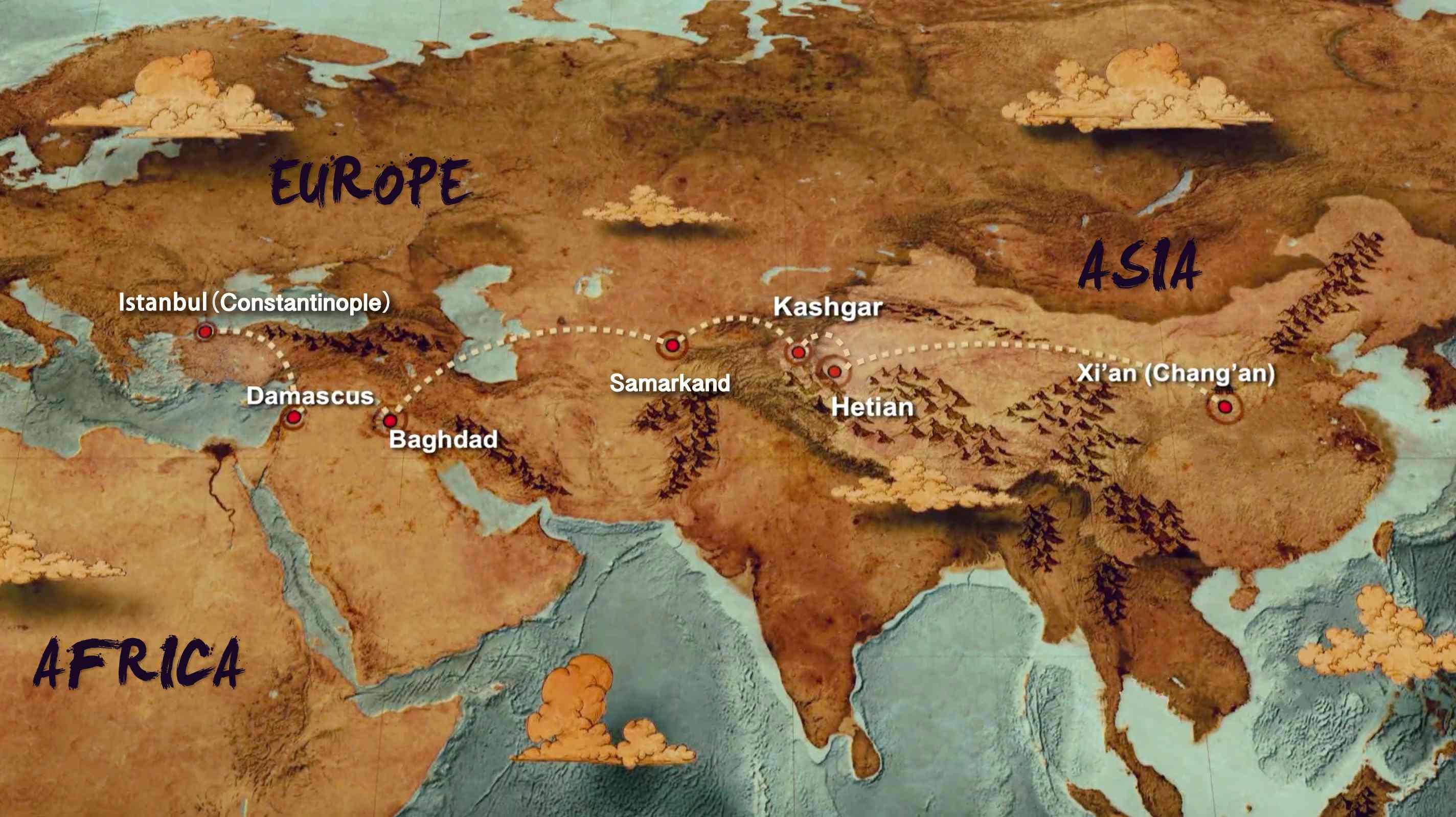
The Silk Road was not just one single dirt path, and people did not only trade silk on it. It was a giant web of dusty tracks stretching across dry deserts and high mountains, connecting China to Europe.
Most travelers actually carried everyday goods like dried fruit, paper, and glass beads, while ideas and diseases moved just as fast as the goods. Read more about this history on Wikipedia's Silk Road page.
What the Silk Road actually was
Think of the Silk Road as a massive trade network rather than a paved highway. Traders rarely walked the whole route from start to finish. Instead, merchants moved goods from one town to the next, handing items over at busy markets.
By the year 100 BCE, this network connected Chang'an in China all the way to Rome in Italy. A camel caravan might travel just fifteen miles in a single day before stopping to rest in a walled guest house called a caravanserai.
Water was the biggest worry for anyone on the path. Wells were often days apart, and a dry well meant certain doom for both men and beasts. Merchants had to pack heavy leather bags filled with water just to survive the crossing of the Taklamakan Desert.
You can read about other lost places that trade routes helped connect in The Town That Was Buried and Found Again.
What people traded besides silk
Silk was very popular, but it was basically ancient money. Kings and rulers used heavy rolls of silk to pay their soldiers and buy loyalty from neighboring tribes.
Ordinary merchants traded things that people needed every single day. Salt was worth its weight in gold because it kept meat from spoiling in the hot sun. Spices like cinnamon and pepper made plain barley porridge taste much better.
Glassware from Rome was prized in China because local glassmakers used different methods. Roman glass bowls looked like magic to people living thousands of miles away.
Horses were another huge trade item, especially strong war horses from the Fergana Valley. Chinese emperors needed these tall animals to fight off nomadic riders from the northern steppes.
The strange things that moved along the road
Objects were not the only cargo moving across the desert sands. Ideas, songs, and religious beliefs jumped from camp to camp with every passing season.
Buddhism traveled from India into China along these very paths, changing art and architecture along the way. Monks walked beside armed guards, sharing cave walls for shelter and painting huge statues into cliff faces.
Technologies moved slowly from east to west over hundreds of years. The secret of making paper left China in the eighth century and eventually changed how schools and governments worked in Europe.
Unseen germs also caught a ride on the trade route. Bubonic plague bacteria traveled in the blood of fleas living on rats hidden inside grain sacks, changing the population of entire continents.
What were the most common goods traded on the Silk Road?
People often picture bags of gold and chests of rubies moving across the desert. The truth is much more practical and grounded in daily survival.
- Dried dates and raisins for quick energy on long desert treks
- Rough wool cloth and warm furs for cold mountain nights
- Ceramic bowls and jade carvings from skilled Asian artisans
- Iron cooking pots and sharp metal blades for daily camp use
Merchants carried these items because every town had buyers for cheap tools and good food. Luxury items took up less space, but food kept the traders alive.
Even animal skins and feathers found buyers in distant cities where those creatures did not live. Trade filled the gaps in what local land could provide.
Life inside a desert trading camp
When evening came, travelers squeezed into stone forts to stay safe from bandits and freezing wind. These roadside inns were loud, crowded places filled with the smell of wood smoke, roasting mutton, and tired camels.
You would hear a dozen different languages spoken around the central courtyard fire. Persian, Sogdian, Chinese, and Greek all mixed together as men traded stories and bargained for spare boots.
Thieves watched the main paths constantly, waiting for small groups to stray too far from the main caravan. Smart merchants hired fierce guards who knew how to use bows and short swords in close fights.
Morning brought the sound of heavy wooden bells around camel necks before dawn. Everyone packed their bags in the dark to beat the scorching midday sun.
How the great trade network finally faded
The land routes slowly lost their power when ships got bigger and better during the age of discovery. European sailors found they could sail around Africa to reach the spice markets of Asia without paying taxes to land kings.
Cities that grew rich on desert trade started to shrink as wells dried up and sand blew over the streets. Earthquakes and shifting political borders also made the old mountain passes too dangerous to cross.
Today, the wind blows through ruined mud-brick towers where busy markets once stood. The ghosts of camels and merchants still haunt the dry riverbeds of Central Asia.
You can discover more stories about ancient global connections by checking out ancient history updates and articles to see how our modern world was built by these old paths.
Next time you buy something made on the other side of the planet, remember the old travelers who walked for months just to share a cup of tea and a piece of cloth. What small item from your own backpack would you carry across a desert?
How travelers found their way across empty lands
Navigation was a serious challenge when the landscape offered no trees or rivers to follow. Experienced guides looked up at the night sky to map their course across the vast dark expanse. Stars provided a reliable compass for men leading long lines of animals through the quiet night.
When storms kicked up thick dust clouds, the world disappeared completely in minutes. Travelers tied themselves together with thick ropes so nobody would wander off and get lost in the blinding yellow haze. Waiting out a storm inside a shallow rock cave often meant losing precious days of travel time.
What families left behind in oasis towns
Oasis towns grew up wherever mountain snowmelt managed to reach the dry valley floors. Local families farmed small plots of wheat and melons to feed the hungry visitors passing through their gates. Children traded polished river stones and small clay toys with foreign kids whose fathers drove carts of goods.
Women wove thick woolen blankets that kept out the biting frost of high altitude nights. These local crafts became prized souvenirs for merchants who wanted to replace worn out gear before tackling the next dangerous mountain climb.
The languages that connected strangers
Talking with people from totally different lands required a lot of patience and hand gestures. Sogdian became the common language of the trade routes because those clever merchants ran most of the markets along the middle sections. If you wanted to buy a bowl of hot soup or trade a tired camel, you needed to know at least a few words of their tongue.
Translators sat near the heavy wooden gates of every busy trading post. They charged a small fee to help strangers agree on prices for salt, grain, and iron tools without getting into a fistfight.
- Simple hand signs to settle basic food prices quickly
- Common words for water, fire, bread, and danger
- Shared numbers used by all traders to count coins
- Local customs taught by guides to keep guests safe from trouble
Music also helped bridge the gap between people who could not share a spoken sentence. A catchy tune played on a wooden flute or a small drum brought smiles to faces around the evening fire, proving that human joy sounds the same in every language.


Comments
Post a Comment